STILLPOWER GUIDE / BATTERY LEARNINGBattery learning · Practical next steps

REUSE & REALITY · 5 min READ

Old batteries. Worth a second look?

Turn that forgotten shelf into a clear decision: investigate, replace or recycle. Explore EZ Battery Reconditioning’s illustrated learning material along the way.

Featured digital course · No physical battery included

This article contains a ClickBank affiliate link. We may earn a commission if you purchase through it. How our links work

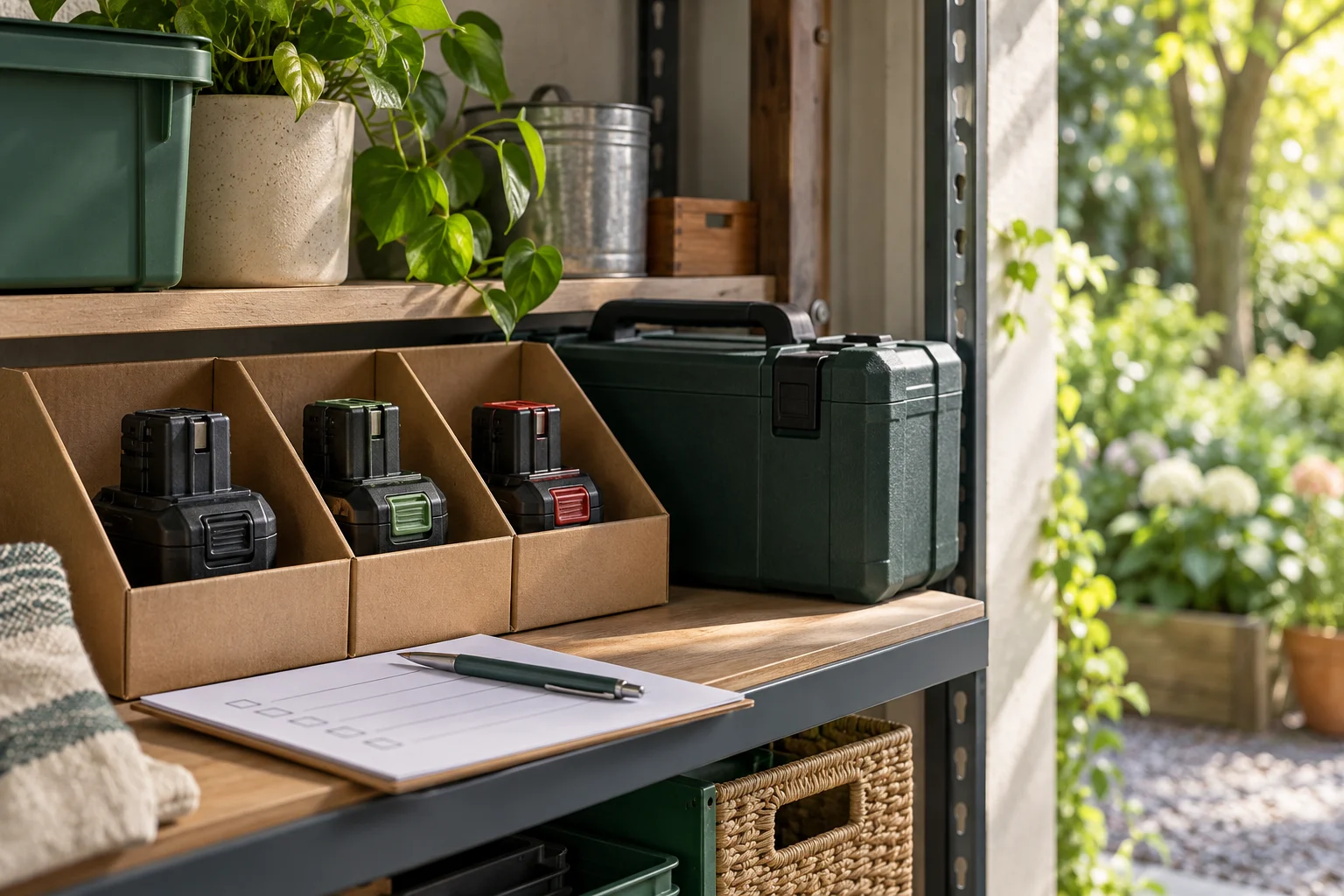
Illustrative enclosed tool batteries separated in individual cardboard compartments on a tidy garage shelf
AI-created editorial illustration. No customer result depicted.
StillPower editorial review · October 23, 2026Public offer reviewed · Course not tested
YOUR FIRST STEP

Identify the battery and consult its manufacturer before considering maintenance. Recycling is a useful outcome when a battery has reached the end of its life.

Turn the collection into an inventory

A box marked “old batteries” hides several different decisions. Start with the readable model information and battery chemistry, the device each item belongs to, its history and whether manufacturer support is available. Keep this as an inventory exercise rather than a repair experiment.

Decide which devices you still use. Researching a battery for a useful tool is a different choice from buying equipment to recover a pack for a device you no longer need. That simple distinction can save both money and storage space.

Illustrative enclosed tool batteries separated in individual cardboard compartments on a tidy garage shelf
IN FOCUS / DIGITAL COURSE
EXPLORE EZ BATTERY RECONDITIONING

Turn “maybe someday” into an informed decision.

Digital learning · No physical battery included

GIVE YOUR CURIOSITY A NEXT STEP

Old batteries. A new subject to explore.

That shelf of forgotten batteries can start a useful learning project. EZ Battery Reconditioning markets downloadable, illustrated guides for people interested in understanding the seller’s reconditioning approach.

  • Illustrated learning materialThe seller describes guides with illustrated instructions.
  • A topic you can investigateReview the battery types and methods the course covers.
  • Support to check before buyingSee what help the seller includes with the current package.
Explore the illustrated guides See the seller’s presentation & current offer

Affiliate link · We may earn a commission if you buy through this link. We have not purchased or tested the course. Battery recovery and savings are not guaranteed.

What to check before you buy

For hands-on learners researching battery reconditioning. Confirm supported battery types, equipment costs, current price and refund conditions with the seller. This is educational material; a course purchase does not establish usable backup capacity. Scene: AI-created editorial illustration.

KEEP THE FULL PICTURE

A little context.
A better decision.

Back to the course ↑

Separate maintenance from a universal recovery claim

Trojan’s guidance illustrates why the exact design matters: its AES AGM batteries must not be equalized. A maintenance term you see online is not permission to apply the same procedure to every battery.

Before considering a course, ask which chemistries and failure modes it covers, what it excludes and what evidence supports the claimed result. Good learning material should make those boundaries easier to understand. We do not provide cell-rebuilding or battery-opening instructions here.

Know when to use the recycling route

The US EPA says used lithium-ion batteries should go to appropriate battery collection or recycling services rather than household trash or municipal recycling bins. For a damaged battery, contact the battery or device manufacturer for specific handling advice. Check the receiving service’s requirements before transport.

Choosing recycling does not mean the investigation was wasted. You have identified a useful next step and avoided keeping an unsuitable item as an imagined emergency reserve.

What EZ Battery Reconditioning offers

EZ Battery Reconditioning markets downloadable guides covering battery reconditioning, illustrated instructions and support. Its seller page displayed a $47 one-time purchase and a 60-day money-back claim when checked on October 23, 2026. Recheck the exact package and conditions on the offer page.

We have not purchased the material, tested any method or independently validated the seller’s recovery and earnings claims. Its public description is enough to identify the type of product being sold, but it does not establish that a particular battery can be recovered.

Ask five questions before buying a guide

Does it cover the exact battery design you own? Does it identify conditions that make an attempt inappropriate? Is the full equipment cost stated? Are there documented measurements after treatment? Is the support and refund process clear?

If those answers remain unclear, keep researching or use the manufacturer’s support route. If the course still interests you, treat it as an educational purchase and judge the material against those questions. You do not need to assume success in order to make a better decision.

Sources & what we checked

Public seller pages and the linked technical guidance were reviewed October 23, 2026. Seller descriptions establish what is being marketed, not whether its methods work. Examples and arithmetic are illustrative; no customer success story is implied.

ANOTHER QUESTION WORTH ASKING

Keep exploring.

PREFER A READY-MADE OPTION?

Keep learning.
Then compare the hardware.

A digital course and a portable power station serve different needs. If you want an integrated battery system, use our planner and compare published specifications.

Compare portable power stations Estimate the capacity you need →Manufacturer-sourced specifications · No hands-on testing